

 We also have luxury cottages!






















Cost Principle Financial Accounting II Vocab, Definition, Explanations Fiveable

Lisa’s company purchased a piece of equipment for the kitchen in 2018 for $15,000. The cost on the balance sheet remains at the original price of $15,000. Appreciation of an asset occurs when the value of the asset increases. When reviewing the worth of assets, appreciation is treated as a gain. The difference of the asset’s current worth and the original cost is recorded as a “revaluation surplus.” This can add net worth to a business over time if assets continue to appreciate.
- With values changing all the time, companies that purchased real estate property even five years ago could almost certainly get more for that property now.
- The basic accounting principle is that all the cost principle accounting information needs to be based on a cash or cash-equivalent principle.
- The estimated price at which an asset could be bought or sold in a current transaction between willing parties, often contrasted with the cost principle.
- This means that their true value is constantly viewed and reviewed.
What are the other principles of GAAP?

Yet cost accounting requires they continue to value that asset at the price they paid for it, less any depreciation. The Historical Cost Principle is an essential accounting concept that emphasizes recording assets at their original purchase price. Furthermore, the cost principle’s emphasis on verifiable data enhances transparency and accountability in financial reporting. This transparency is crucial for maintaining investor confidence and meeting regulatory requirements, particularly in sectors where accurate asset valuation is essential for compliance and risk management. The application of the Partnership Accounting cost principle in asset valuation extends beyond mere bookkeeping; it plays a significant role in strategic decision-making and financial planning.
Historical Cost Vs Asset Impairment
The numbers need to be the exact like the actual expenses from business transactions from a specific period. The basic accounting principle is that all the cost principle accounting information needs to be based on a cash or cash-equivalent principle. The cost principle is an important aspect that businesses must follow when it comes to maintaining financial statements. It makes it mandatory for businesses to record raw asset prices, which marks its very original cost, unadjusted against any improvement or depreciation or with respect to the market value. In practice, the cost principle aids in budgeting and forecasting by offering the cost principle is used a stable reference point. For instance, when planning for capital expenditures, companies can rely on historical cost data to estimate future investment needs and allocate resources effectively.
Advance Your Accounting and Bookkeeping Career
- Using assets that are acquired without purchase can be a challenge when using the cost principle.
- In accounting, the cost principle is a foundational concept that dictates how assets are recorded on financial statements.
- Regardless of any market value changes, this historical cost is retained in the financial statements.
- For the past 52 years, Harold Averkamp (CPA, MBA) hasworked as an accounting supervisor, manager, consultant, university instructor, and innovator in teaching accounting online.
- We are committed to providing trustworthy advice for businesses.
- The cost principle means items need to be recorded as the actual price paid.
In addition to this, there are some benefits to using the cost principle, as well. Both benefits and drawbacks of the cost principle are explained below. In general, the drawbacks of cost accounting are more significant for larger companies than for recording transactions small businesses. This is particularly true for businesses with diverse and ever-changing product lines and those that are invested in volatile securities. However, the cost principle does have some shortcomings that may result in even small businesses being undervalued. The cost principle can still apply to certain items even if they undergo depreciation or amortization, as these are calculated and recorded over time based on the asset’s historical cost.
- Determining the fair value of an asset often involves a degree of estimation and judgment, which can introduce subjectivity into the financial statements.
- Of course, you can also depreciate any capitalized assets over time.
- All liquid assets are recorded on the balance sheet at their current market values.
- The cost principle can be a helpful tool when it comes to financial reporting within your business.
- The original monetary value of an asset at the time of purchase.
This assumption supports the recording of financial transactions in stable, unchanging currency units, facilitating comparability and financial integrity. The simultaneous application of the cost principle and monetary unit assumption ensures that financial statements are both objective and immune to inflationary effects. Its reliability lies in providing a grounded basis for financial reporting, upon which companies can build further narratives about market dynamics. A deep dive into the cost principle reveals its relationships with other accounting principles, such as the monetary unit assumption and the going concern principle.

Some of them may seem familiar, while others will be entirely foreign. Some of the familiar terms may have accounting-specific definitions, as well. When it comes to accounting, the cost principle is very important. We collaborate with business-to-business vendors, connecting them with potential buyers. In some cases, we earn commissions when sales are made through our referrals. These financial relationships support our content but do not dictate our recommendations.

The Cost Principle Helps Maintain a Consistent Balance Sheet
A long-term asset that will be used in a business (other than land) will be depreciated based on its cost. The cost will be reported on the balance sheet along with the amount of the asset’s accumulated depreciation. Further, the accumulated depreciation cannot exceed the asset’s cost.
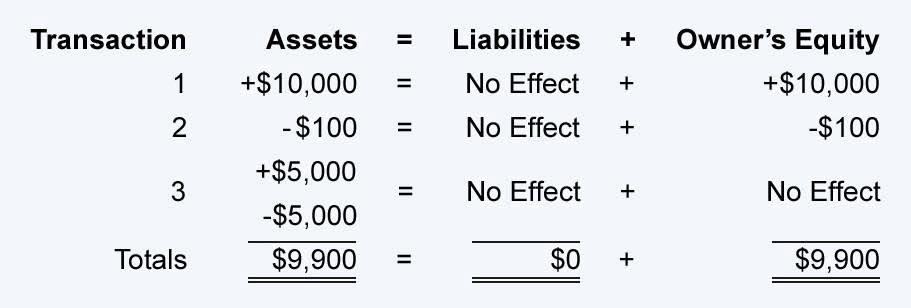
The cost principle ensures that subjective market-based adjustments do not affect the financial statements. This principle ensures that financial statements reflect the actual cost incurred rather than any potential changes in market value over time. By adhering to this principle, businesses maintain a consistent approach to valuing their assets, liabilities, and equity accounts. Over time, the value of assets can fluctuate significantly due to market conditions, technological advancements, or wear and tear. For instance, a piece of machinery purchased a decade ago may no longer hold the same value today, either due to depreciation or advancements in technology that render it obsolete.